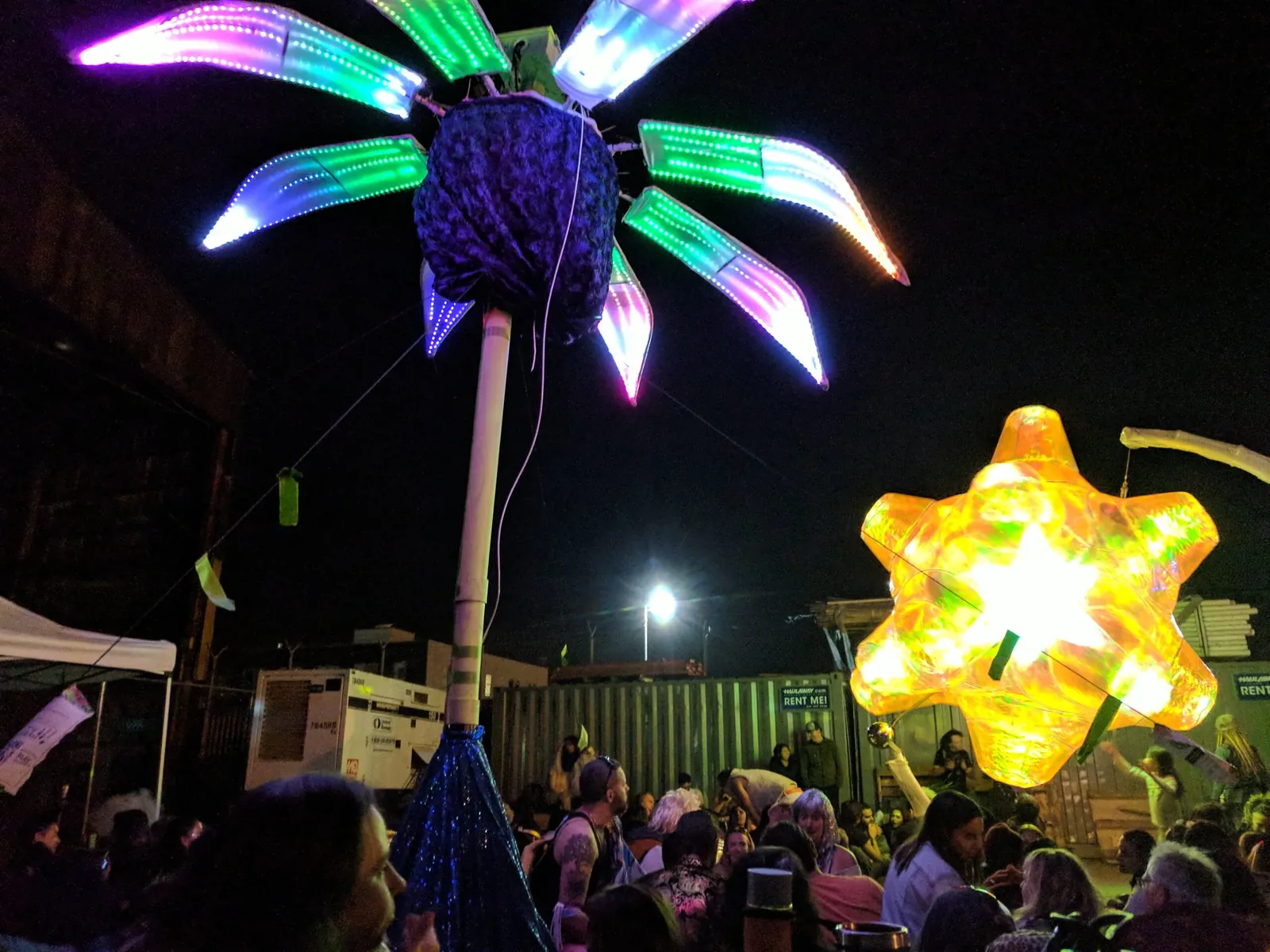
Niantic-Commissioned LED Sculpture
One of thirteen chosen proposals out of hundreds — an 8-petal LED sculpture commissioned for an event sponsored by Niantic Labs (Pokémon Go creator).
Proposal
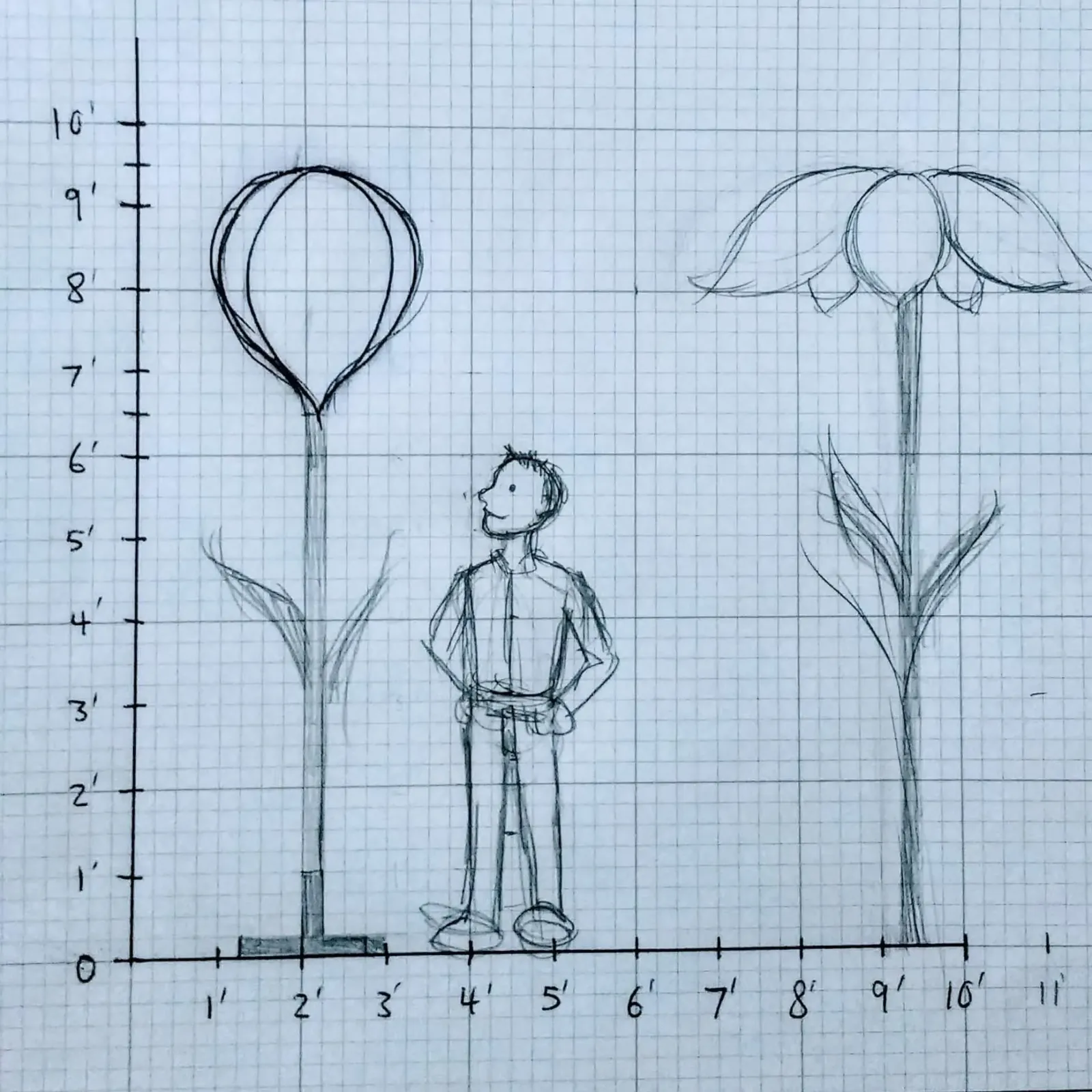
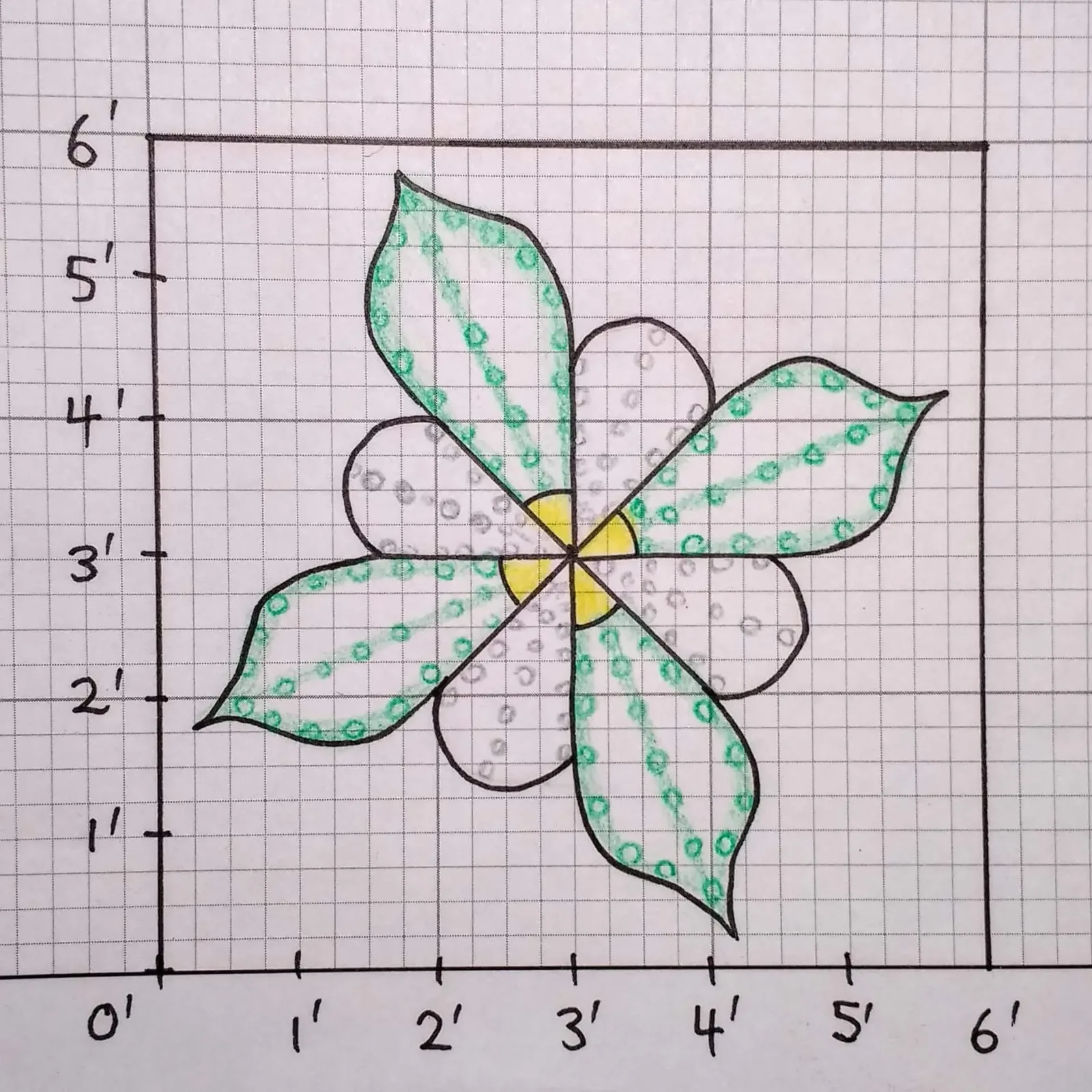
The impetus for our project was the video game our sculpture integrated with, which systematically utilized the number 8. We proposed a large, flower-esque installation with eight petals designed to open and close in response to various states of the game — flashing different colors and patterns depending on in-game events.
Prototyping Sprints
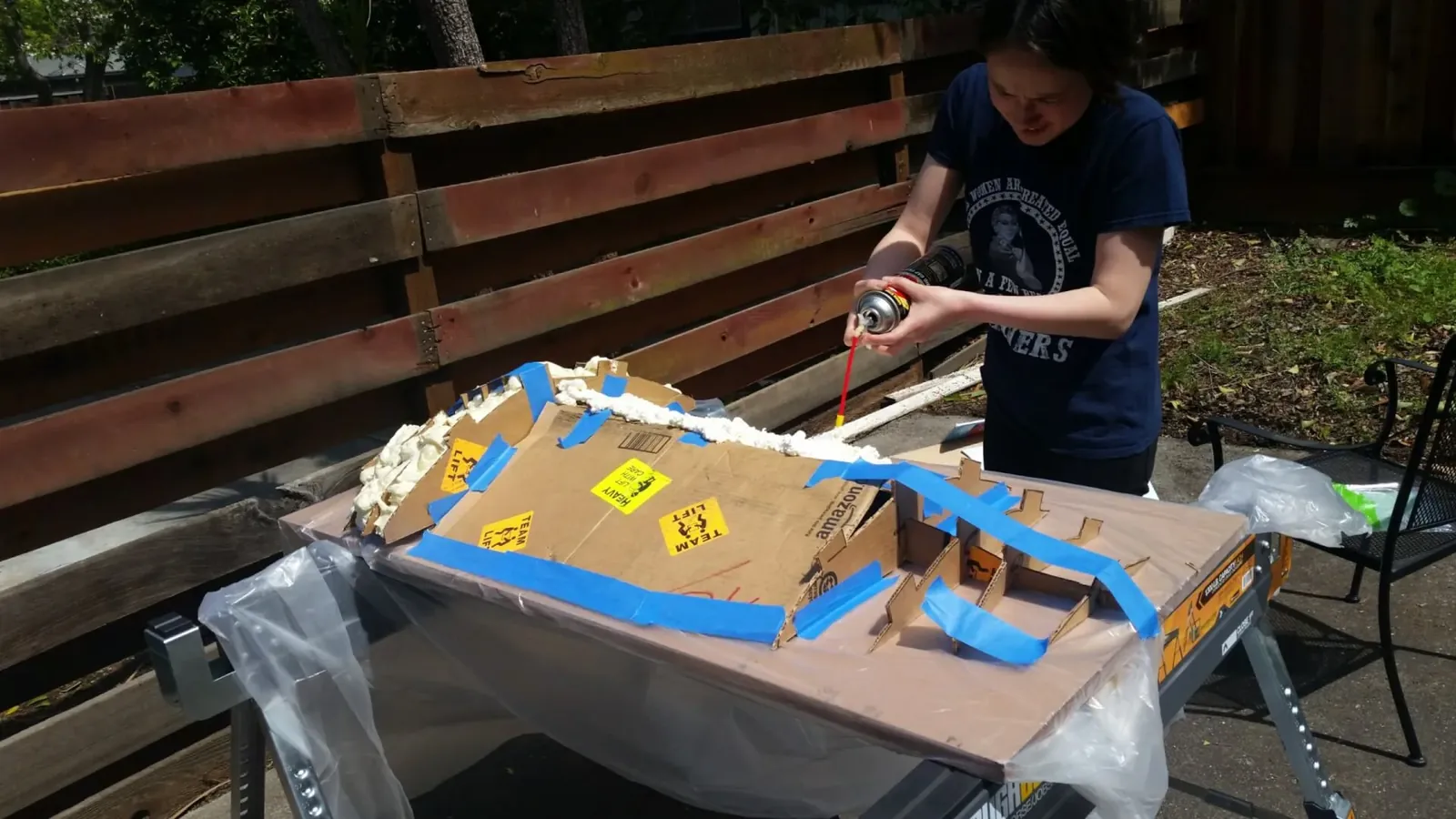
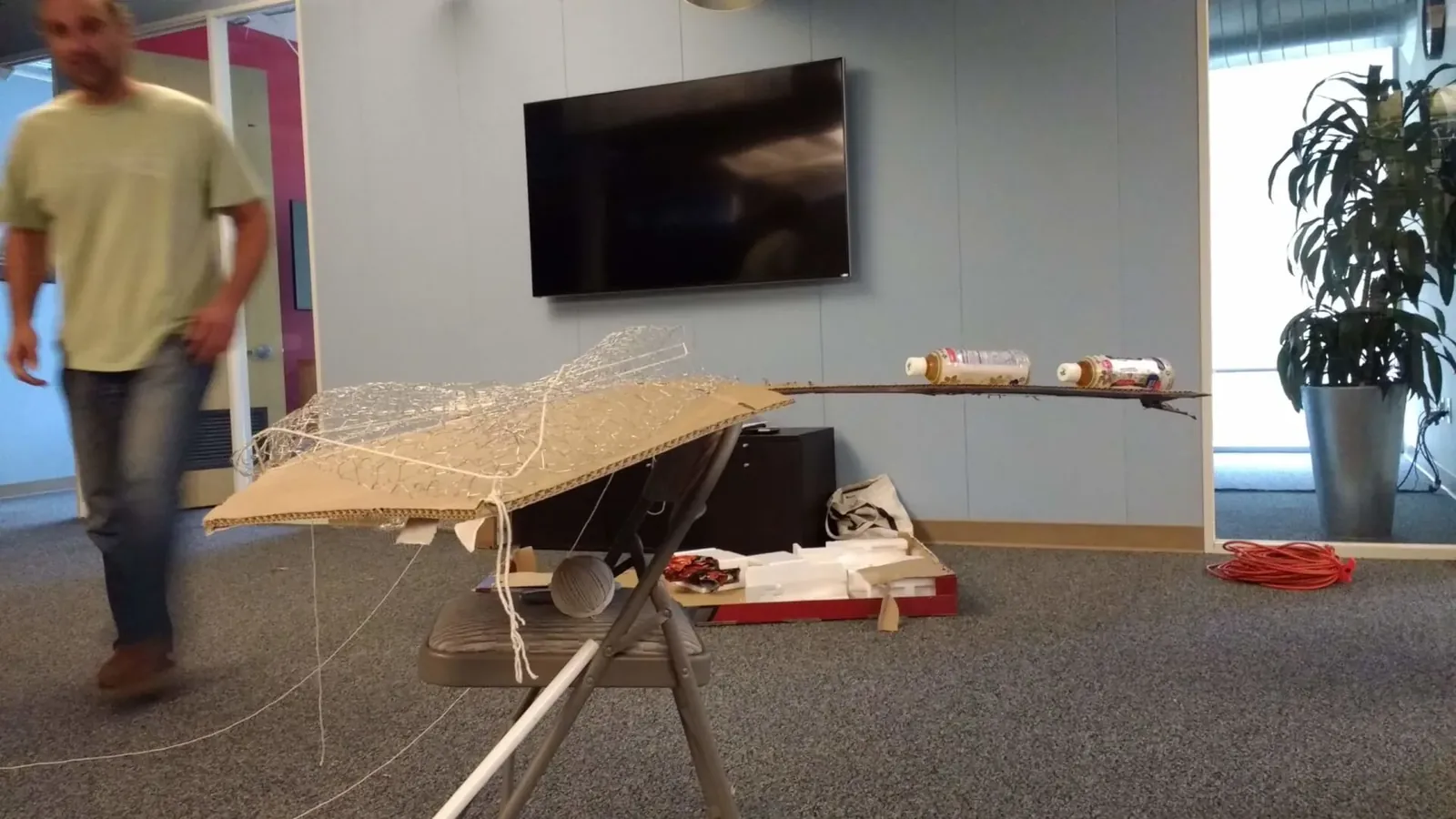
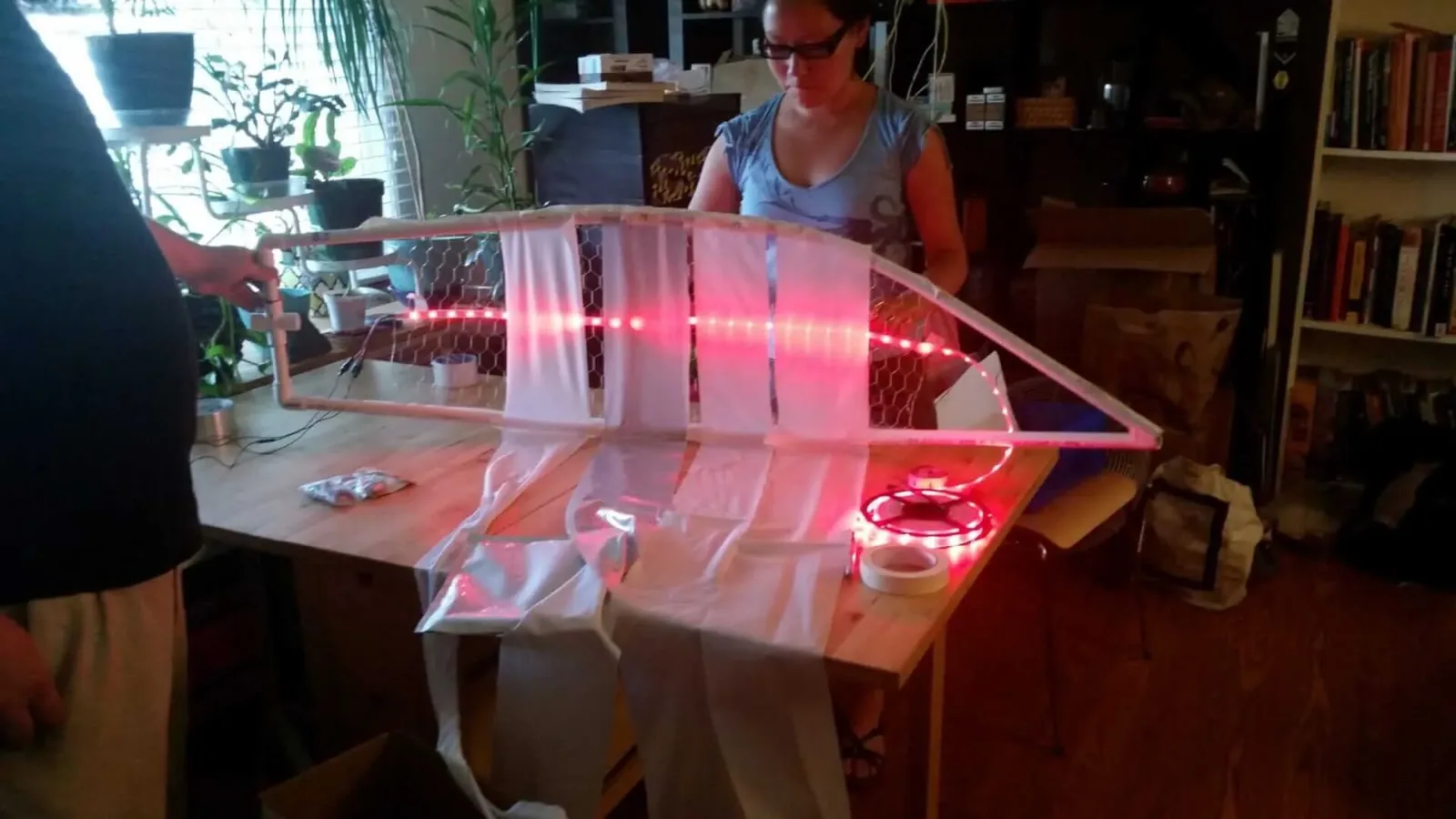
Our team experimented with PVC, cardboard, and foam before settling on PVC and chicken wire structured with zip ties — lighter and easier to reassemble. We tested different fabrics with LED arrays to find optimal light dispersion.
Building
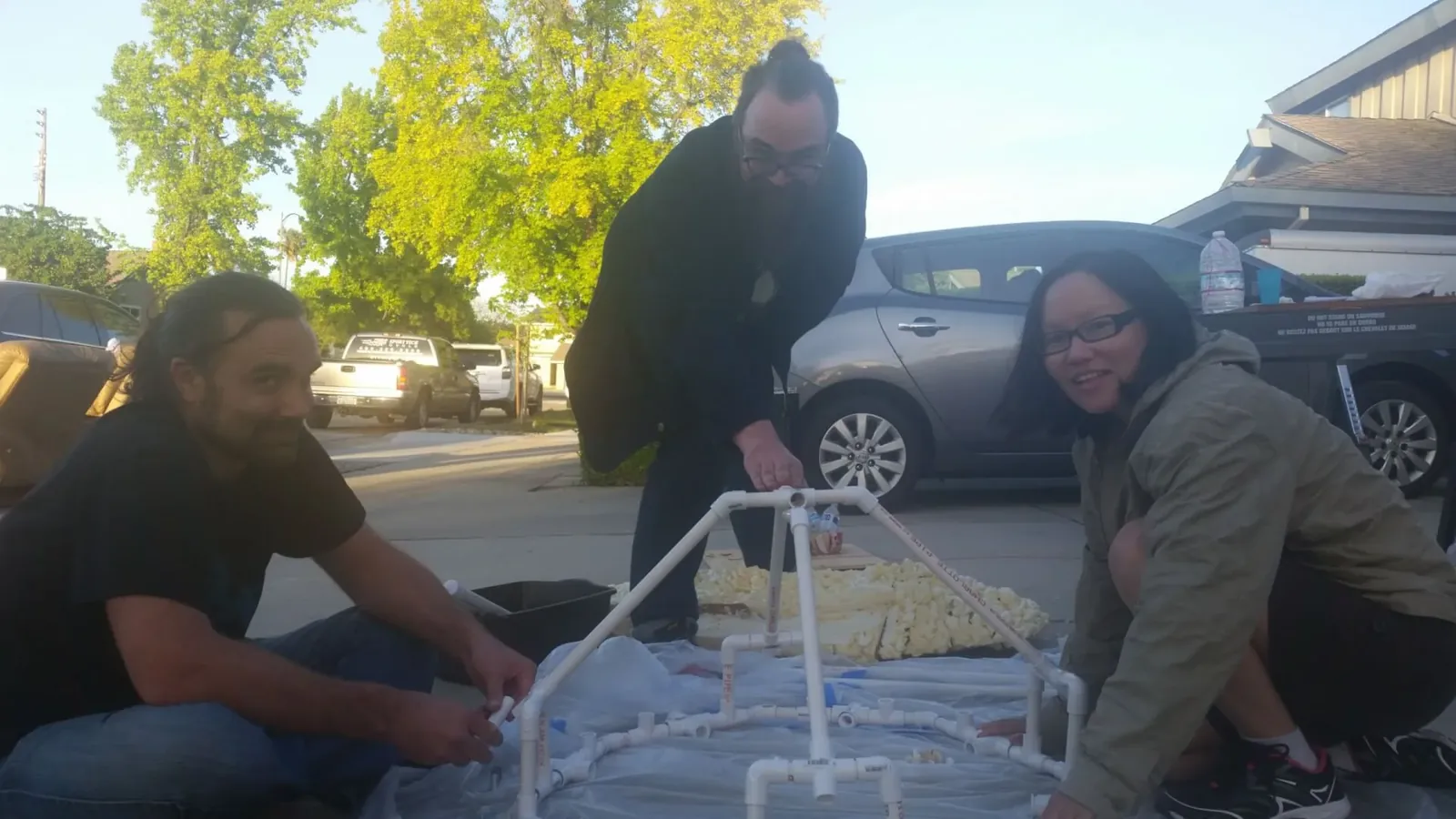
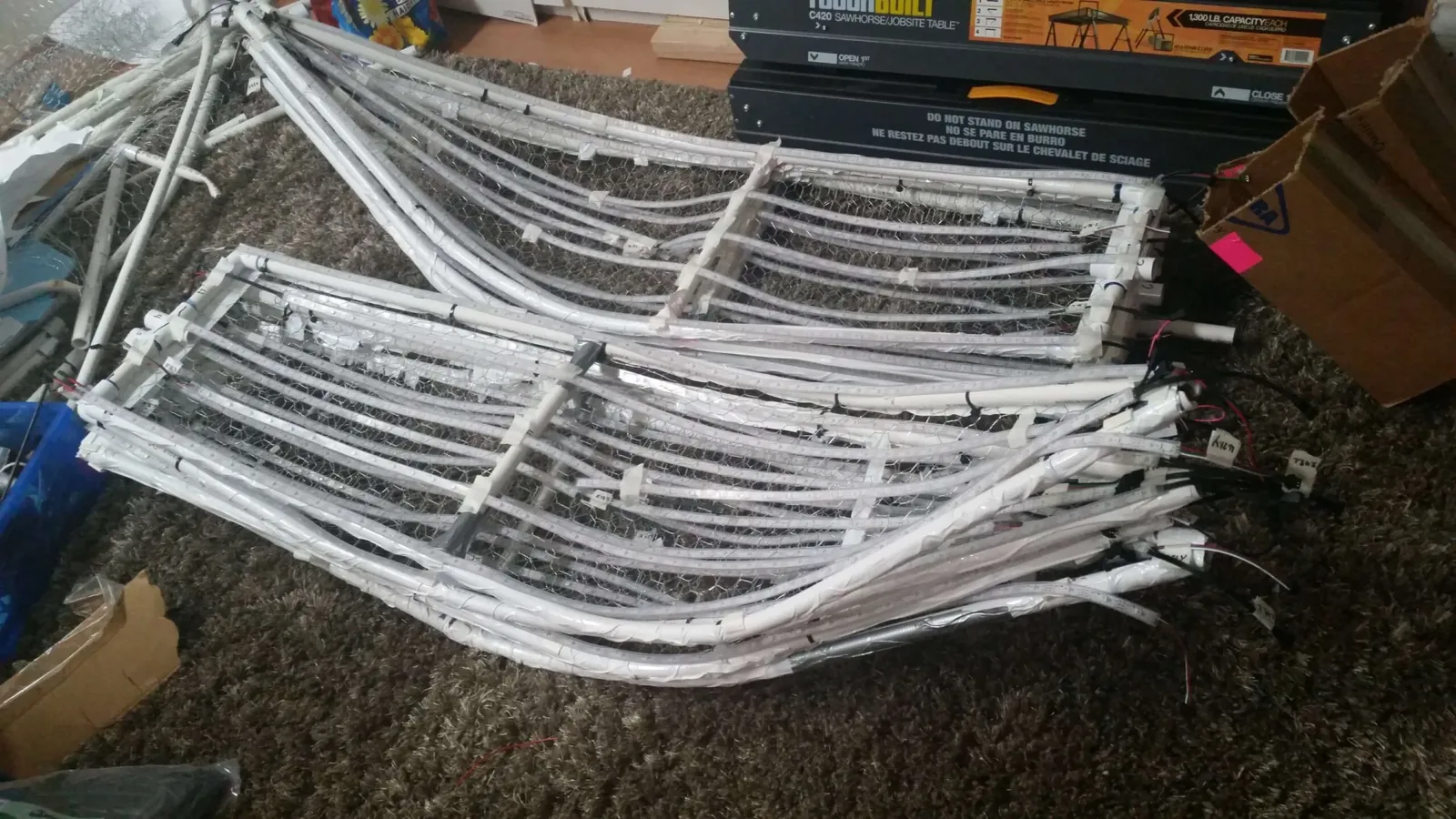
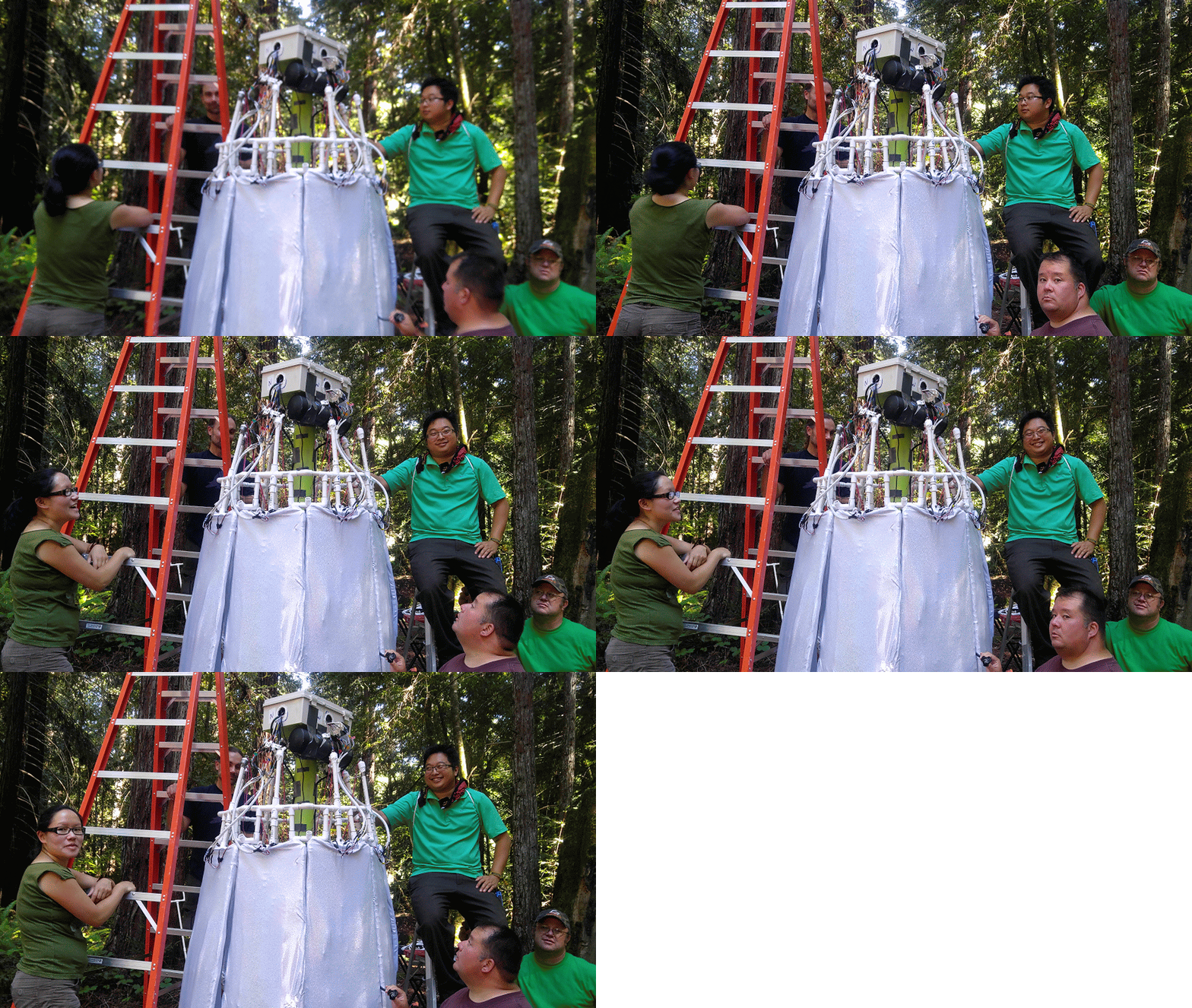
The majority of the build used PVC, chosen for its practicality in disassembly and reassembly. After one or two proof-of-concept parts we were confident in our material choices. The semi-rigid nature of PVC and PVC angle pieces helped maintain consistency across all eight petals — critical for the symmetry the game mechanic required.
Setup & Challenges
While we had envisaged petals opening and closing, we were unable to source the appropriate power and torque to lift the heavy petals. We left them fixed open for all events — which unexpectedly created a whole new dimension of interaction.
All eight petals needed to be individually controllable. We experimented with motors, stepper motors, and servos, constrained by the space inside the flower body.
Takeaways
As a team we moved quickly despite budget constraints — meticulous prototyping gave us confidence in our choices and saved both time and money. The project taught us the importance of flexibility and adaptability when physical constraints override original intent.
Participants interacted in ways we hadn't anticipated. To cover power cords, we borrowed astroturf from the venue — which ended up creating a relaxing space where people would lay and sit beneath the open petals. That emergent behavior became one of the installation's defining moments.